Big cities can be overstimulating. Food, people crowds, taxis – all there to tickle one’s senses. I found myself welcoming the new year in NY, which I took as an omen for a hectic, crazy and plentiful year ahead. And this is exactly what New York is – an absolutely delightful potion of the most amazing architecture, craziest fashion and people – a maze of billions and billions ( and billions – DJT) woderful details.
Yet, I did have to come up with a cataloguing system in my mind to best sort and store this research for future reference.
City Gear
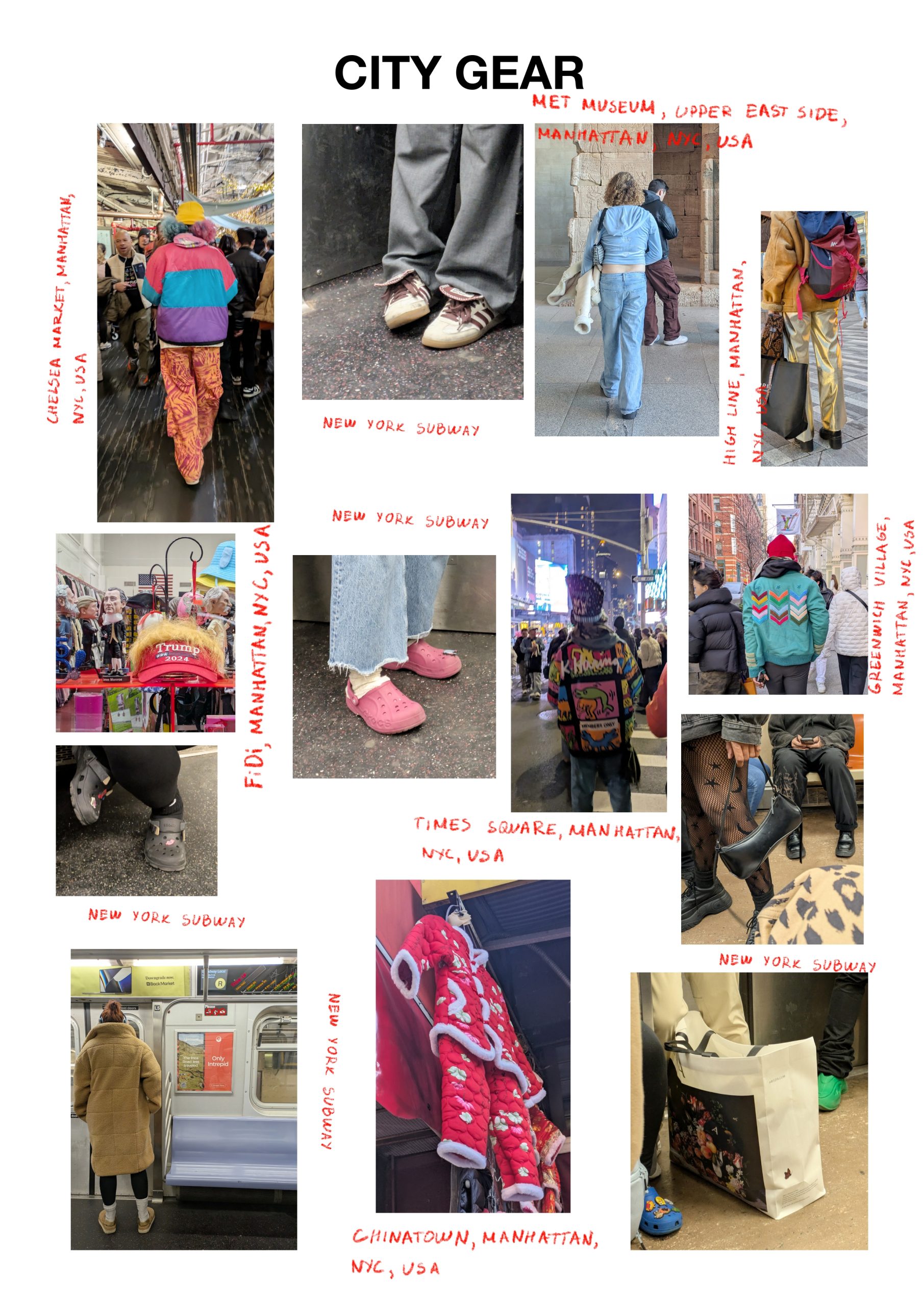
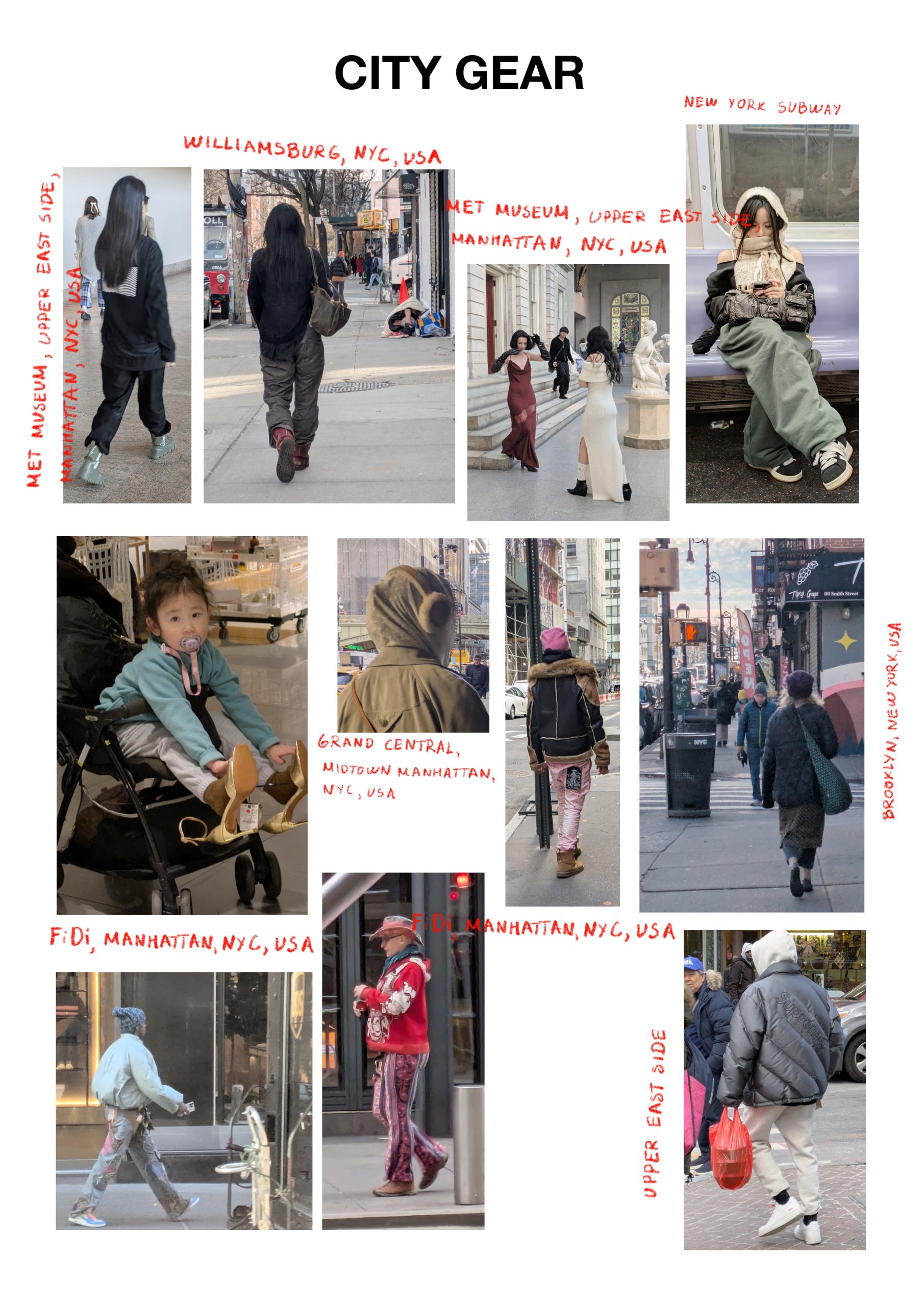
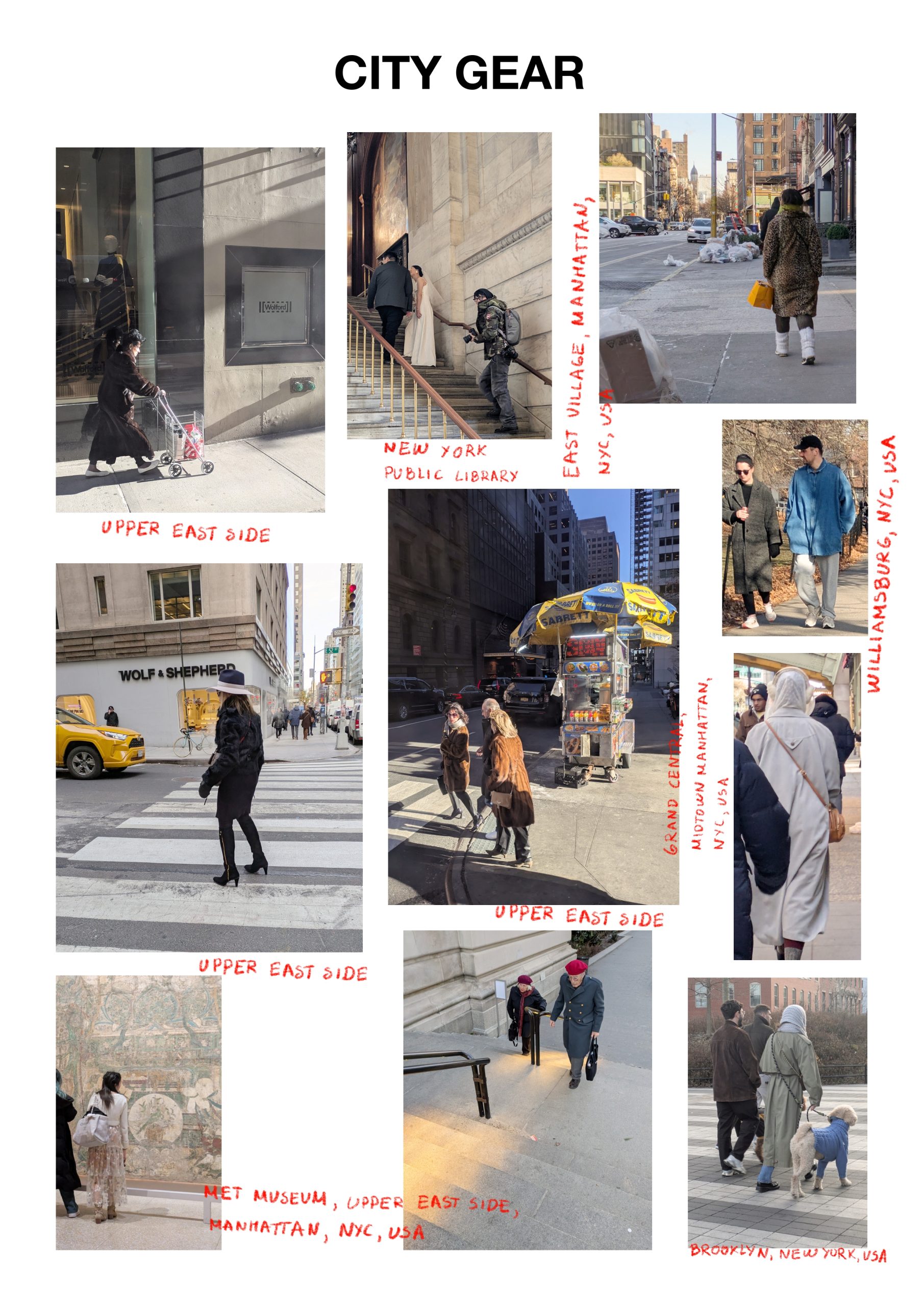
The most magical part of a city are, of course, people. And New York could be many countries all at once – all with their tradition, beliefs and style…
Frankly, I have always been most impressionable by elderly style. This is a big indicator of the socio-economic state of a neighbourhood or a class system. And NYC did serve good elderly style – from mink coated families, to German military style and Upper Easte Side wannabe Bridgerton Lilly van der Woodsens. High boots, belts and all the appropriate accessories – hats tilted to perfection and heels clacking along 5th Avenue towards the next big splurge.
Among younger people, few trends were breaking the traditional milennial and gen Z codes – namely, timeless nostalgia with futuristic twists. A coat or a gabardine trench had to suffice to keep females warm, no matter the freezing wind. And the acessories? Head and leg warmers and poodles – all sizes and in all shades of beige, and with their own stylish coats.
Baggy is the silhouette for both tops and bottoms and yes, everything and at the same time – big boots, baggy pants, baggy tops, and that all topped by immaculate hair and perfect skin.
For young men, tops were unsirprisingly big – puffy, puffy, puffy. And add a touch of rich chinese-style all-over branding. The US seems to succumb under the beautiful sculptural style of Japan, Korea and China – three of the biggest fashion influences of current time with their delicate layering and accessorizing – but doing it americal style – just add a lot of print and color and call it individualizm.
As always, the subway was a main source of inspiration – especially on nights out or on New Year’s eve when people most insisted on showing their personal crazy, frisky, maybe slightly trashy but also fun style. One could observe dozens of Crocs, Stanley Smith collabs, and Uggs getting on and off at each stop, all the way from Maddison Square to Harlem, exchanging colors, variations and personalization makeovers. And a little too much sparkle never looks out of place.
If I had to narrow down to the single most impressive aspect of our big city crawl, that would hands down be architecture. It is not only a defiant of the vibrancy of a city or a neighbourhood, but also a very important historical signifier.
Bricks in Pics
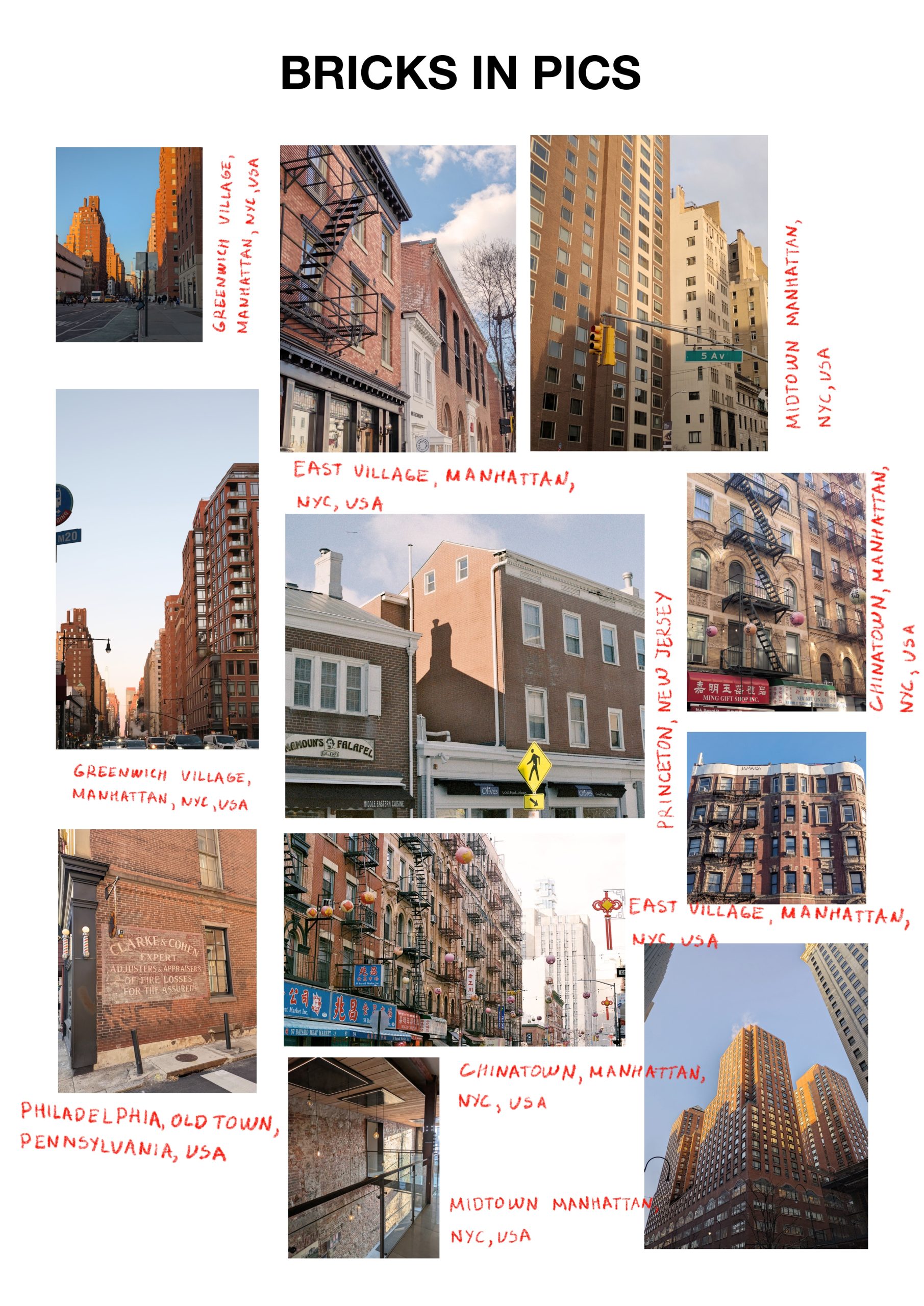
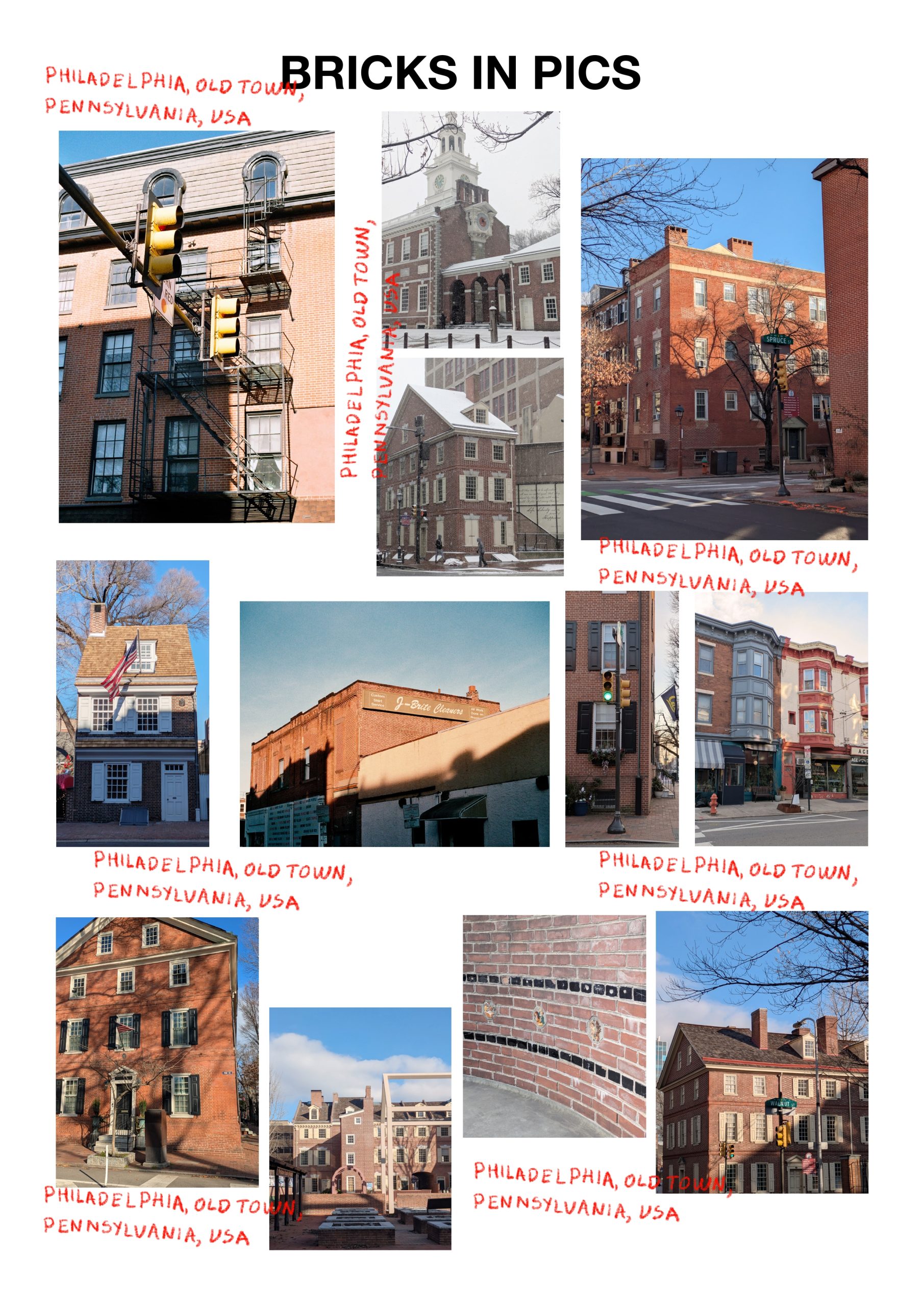
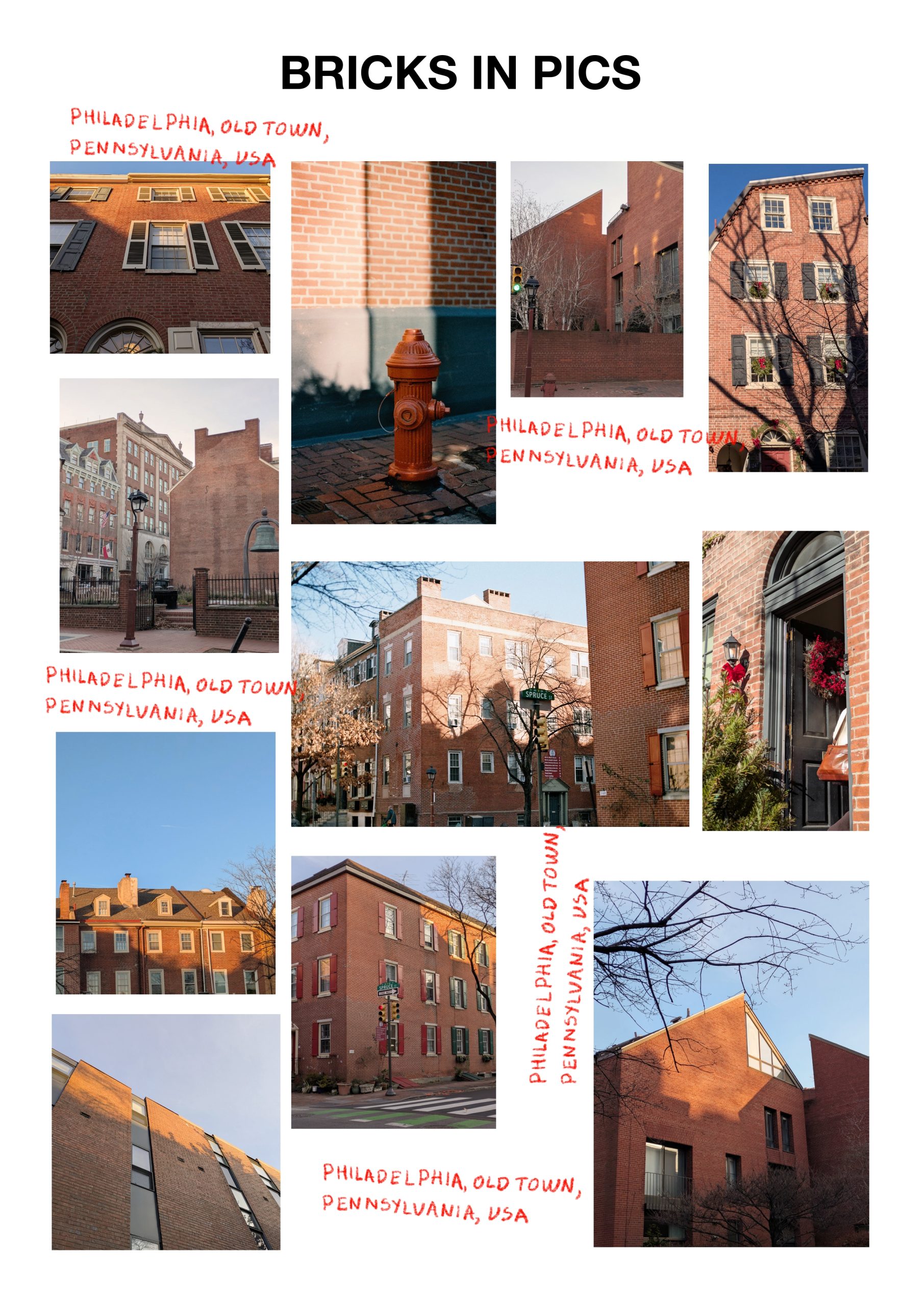
The most traditional style of all, very iconic to both NYC and Philadelphia, is brick architecture, although, in both cases, it plays a slightly different historical role.
As a main architectural stlye, brick buldings appear more significantly for the first time in Philadelphia. As a founding city of the US, it has contained much of the colonial European, and especially British, style of architecture and landscape. Even though in a much bigger scale, shapes and interiors mimic typical midtown British architecture, both in their roof and reading nook placement, and the closeness to other similar cookie cutter style streets of cloned buildings. Still, this is not the cheap cookie cutter row house style you would imagine – it is luxurious, with multiple floors, a small garden, if possible, painted doors with lush Christmas decoration. Some of the richer buildings are now modernised in geometric shapes with much more glass panels used and double glazed windows.
Rather less pastoral and more urban, though just as cozy, are the brick buildings in NY. With their fire escapes and hip bars, they bring much more attention to the rather idealized single person appartment and a hipster big city lifestyle, endorsed by movies, books and musicals. Very integral to Tribeca, Soho and East Village, this is now the style of a wealthy young adult with a dream job, ready to take on the world – and this is the promise of architecture.
Cast Iron
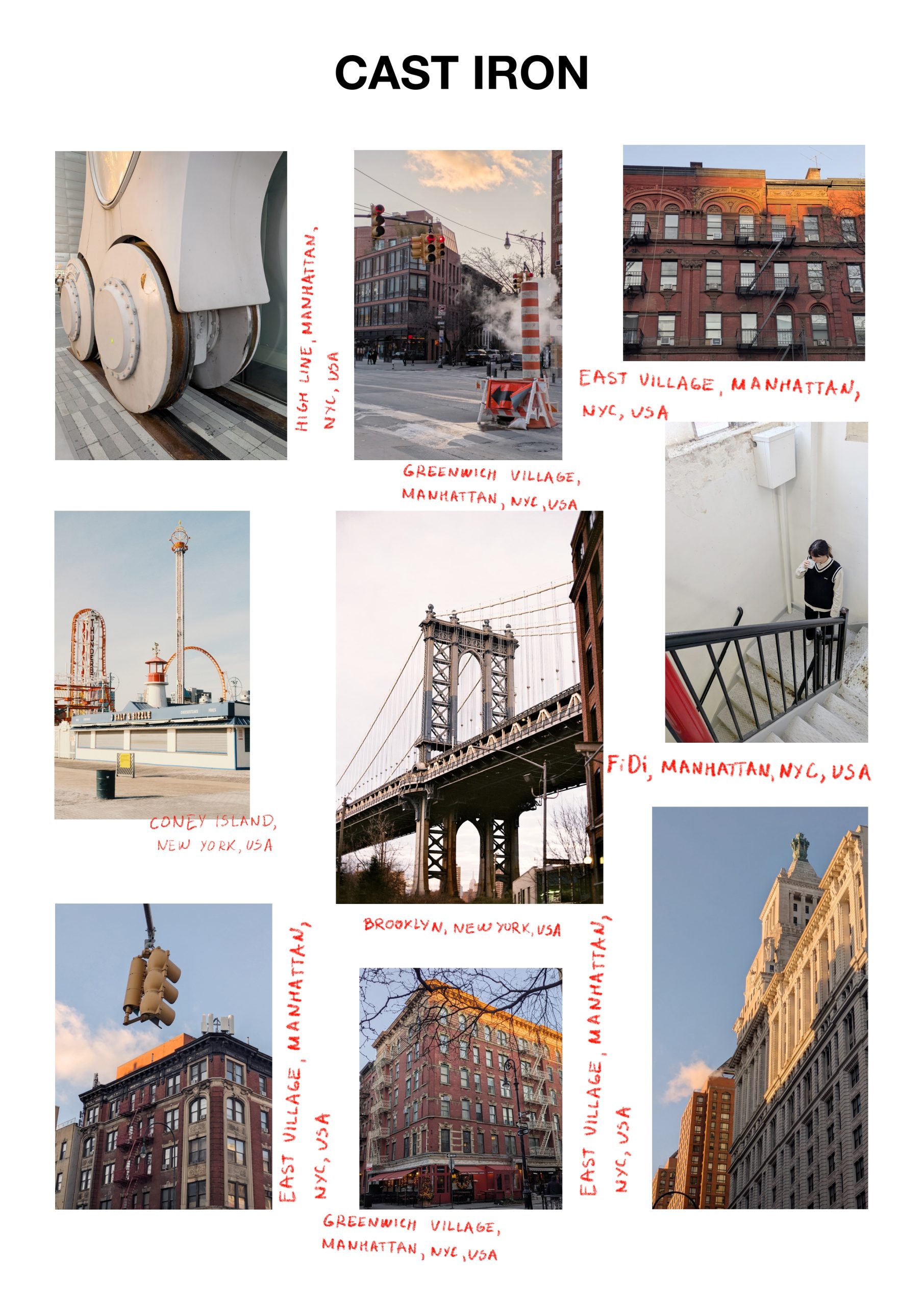
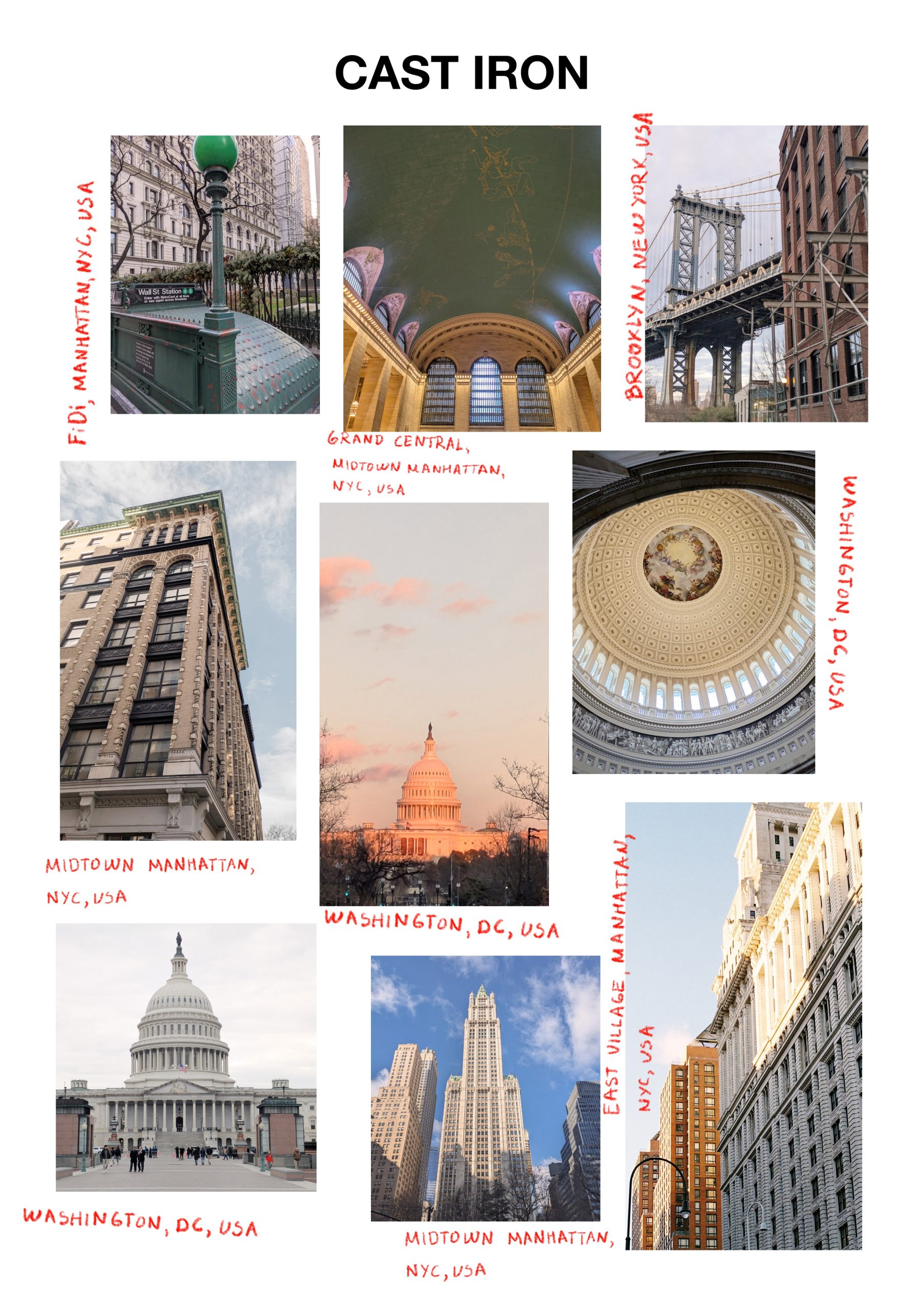
Cast iron is a style of building, which first became widely commercialized in the 1800s as a good alternative to brick and wood. Its relative cheapness, as well as the strength and resistance to deformation, made it an ideal material at the time, used widely in big cities. Adopting cast iron enabled architects to create ornate facades without much labour-intense craftsmanship and this defined the very iconic look of the mid Manhattan romantic neighbourhood that is so known from movies. Cast iron is a feature in many iconic sights, like the Brooklyn bridge (and many other bridges for that matter) and the Capitol in Washington DC. It is very innate to this highly urban look and can also be found on subway exits and window facades.
Diner Aesthetic
And speaking of iconic, there is one category that defines much of the architecture of the entire US and much of the following modern futuristic style architecture. The diner aesthetic is often underestimated as a cliché for both the building itself and its representation of American lifestyle. But I found it fascinating! Many buildings have diner aesthetic and that’s because it originates from train carriages – the long corridor, the tables on both sides, the metal futuristic outside look, the subway tiles – there are a lot of small details, directly translated from this romantic travel arrangement into a much more modern and very beautiful interior and exterior structure. The colorful tiles, windows and nooks, mirrors, strategic sign placement – it’s a masterful play of elements that has been much misunderstood.

Geometry
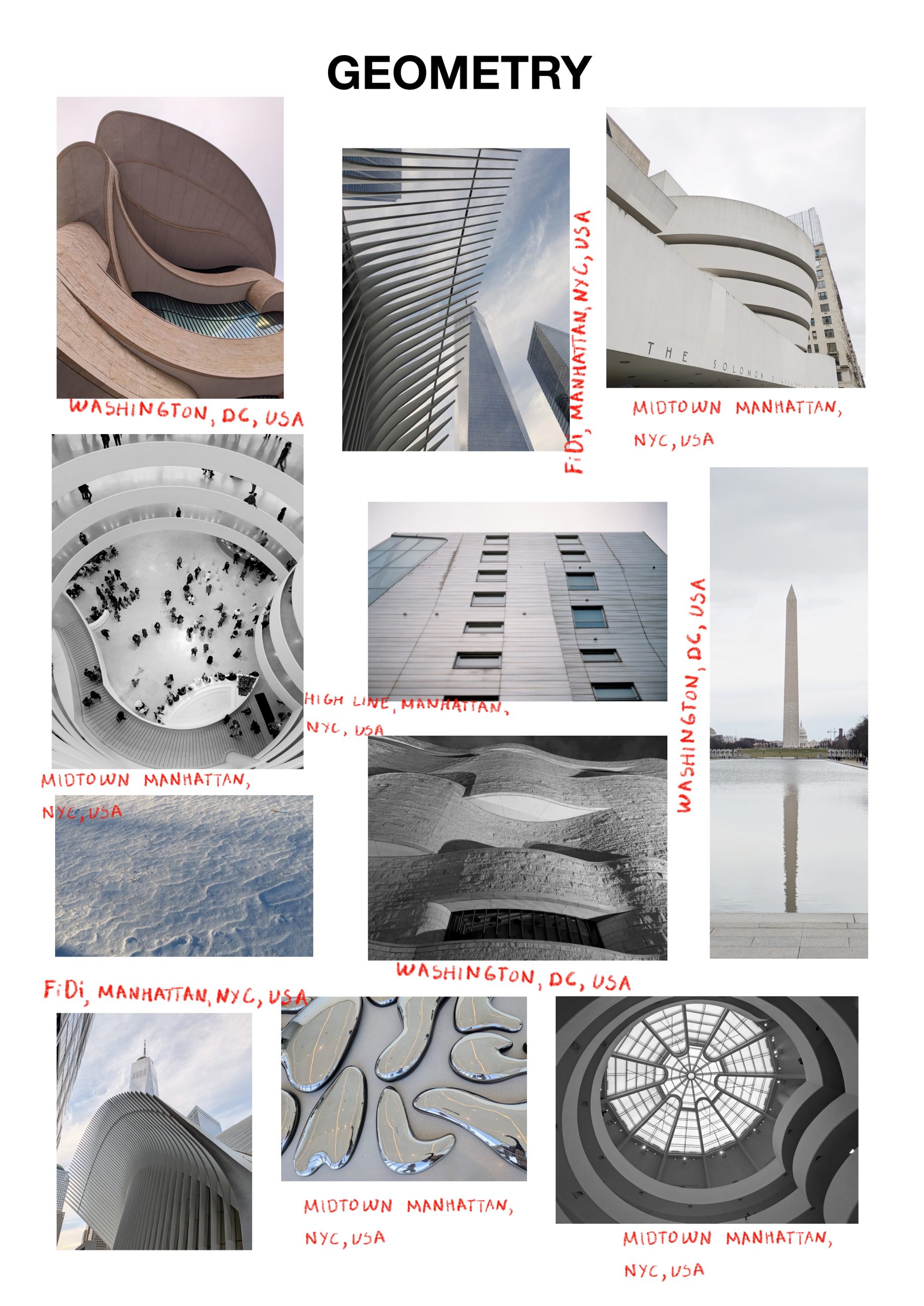
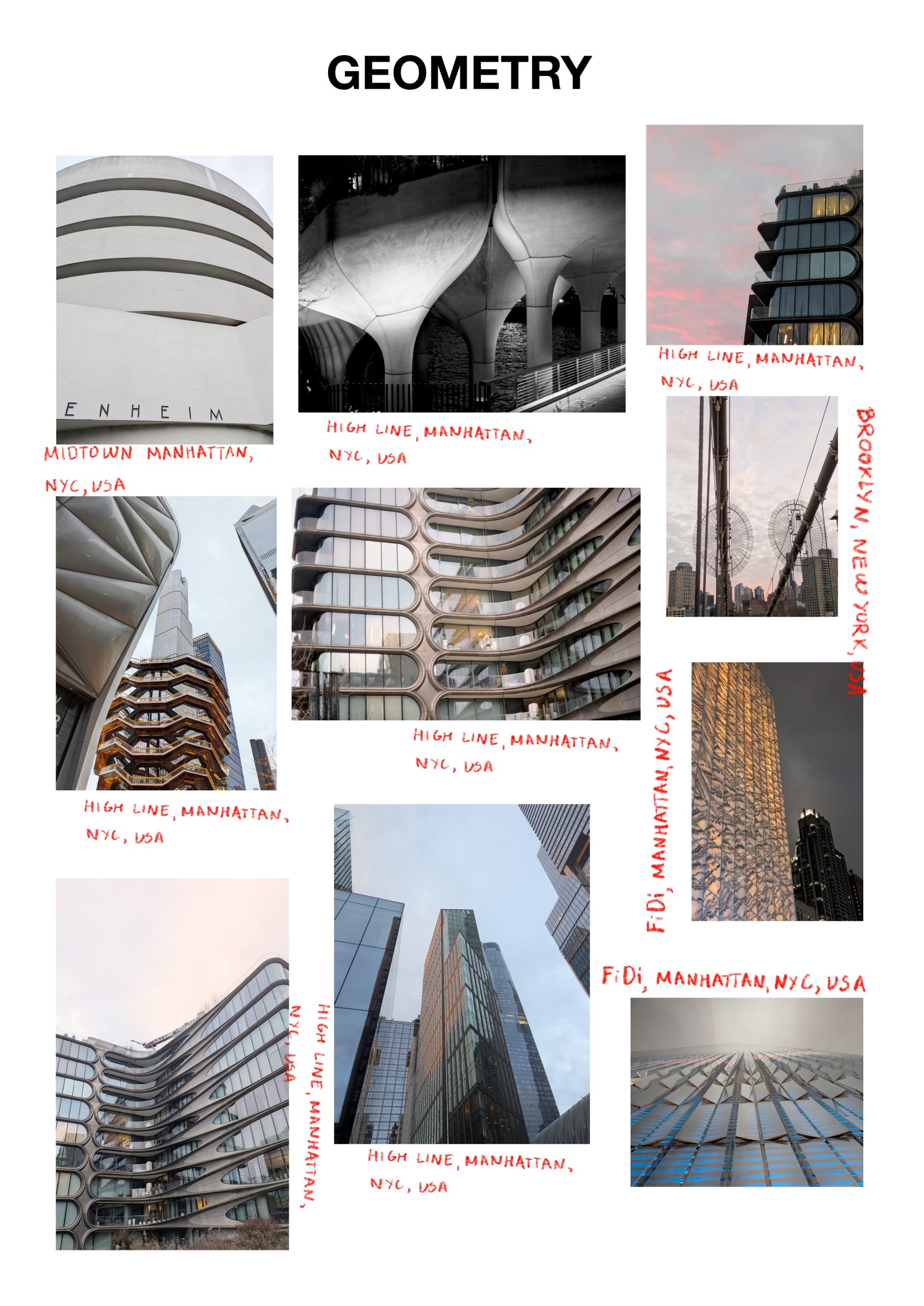
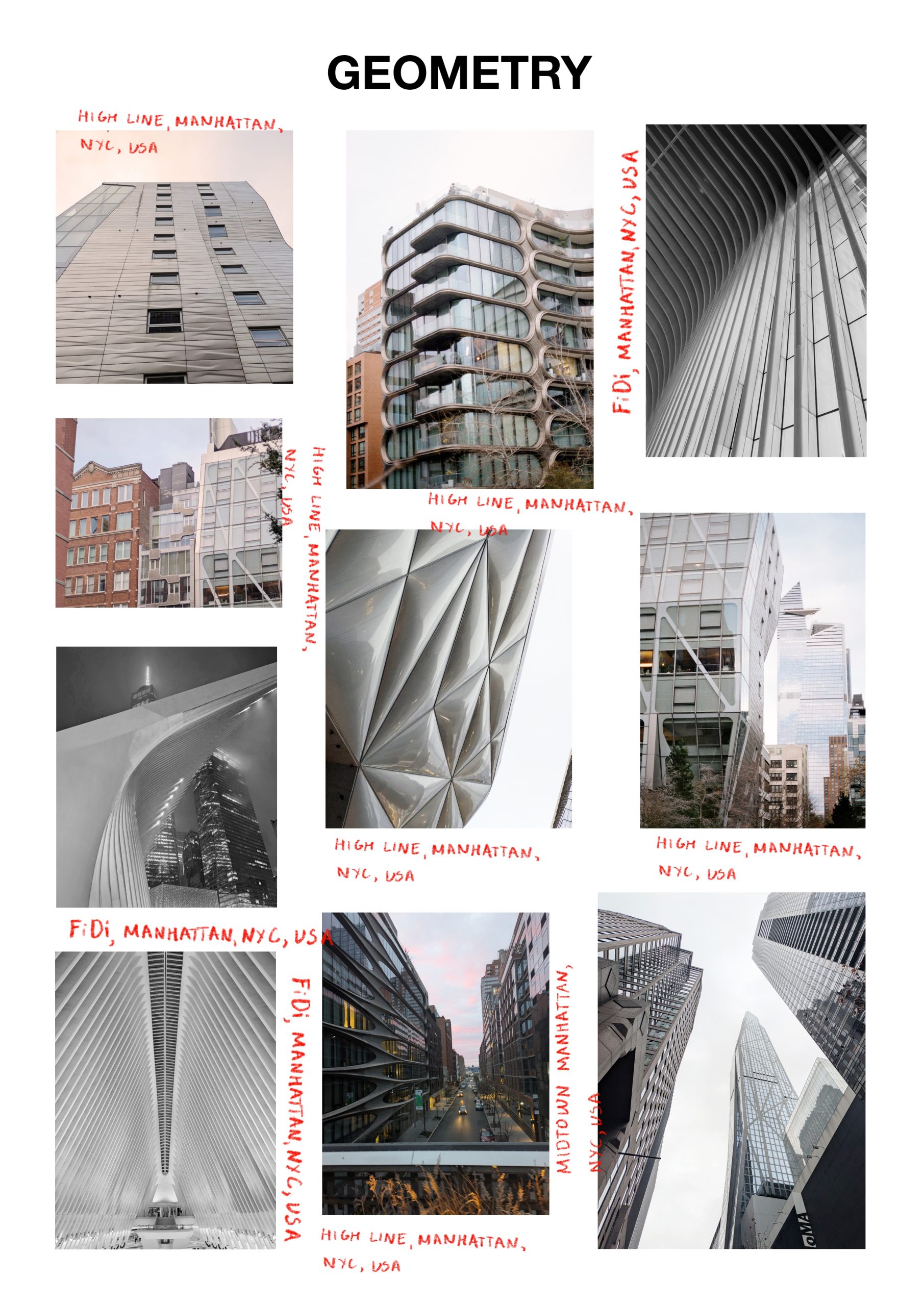
Something done extremely well by American big cities is big geometrical architecture, made even more impressive by its scale. Shapes could be very diverse in in each use case – round, edgy, crooked, mathematical – but they are all done with perfect and satisfying precission. Many of those buildings are a cultural heritage by famous architects – the Guggenheim Museum by Frank Lloyd Wright, the Oculus building by Santiago Calatrava, 520 W 28th Street building by Zaha Hadid, High Line 23 by Neil Denari; others are popular cultural sights – like the Washington Monument or the Native American Museum in Washington. Regardless of the setting, this architectural richness completely blew me away – not only with its beauty, but also its purpose. If you ever wonder how the shape of a building can change a sensory experience, visit the Guggenheim Museum in Manhattan – it is one of the best curated museums and (almost) only by vurtue of its structure.
Reading signs
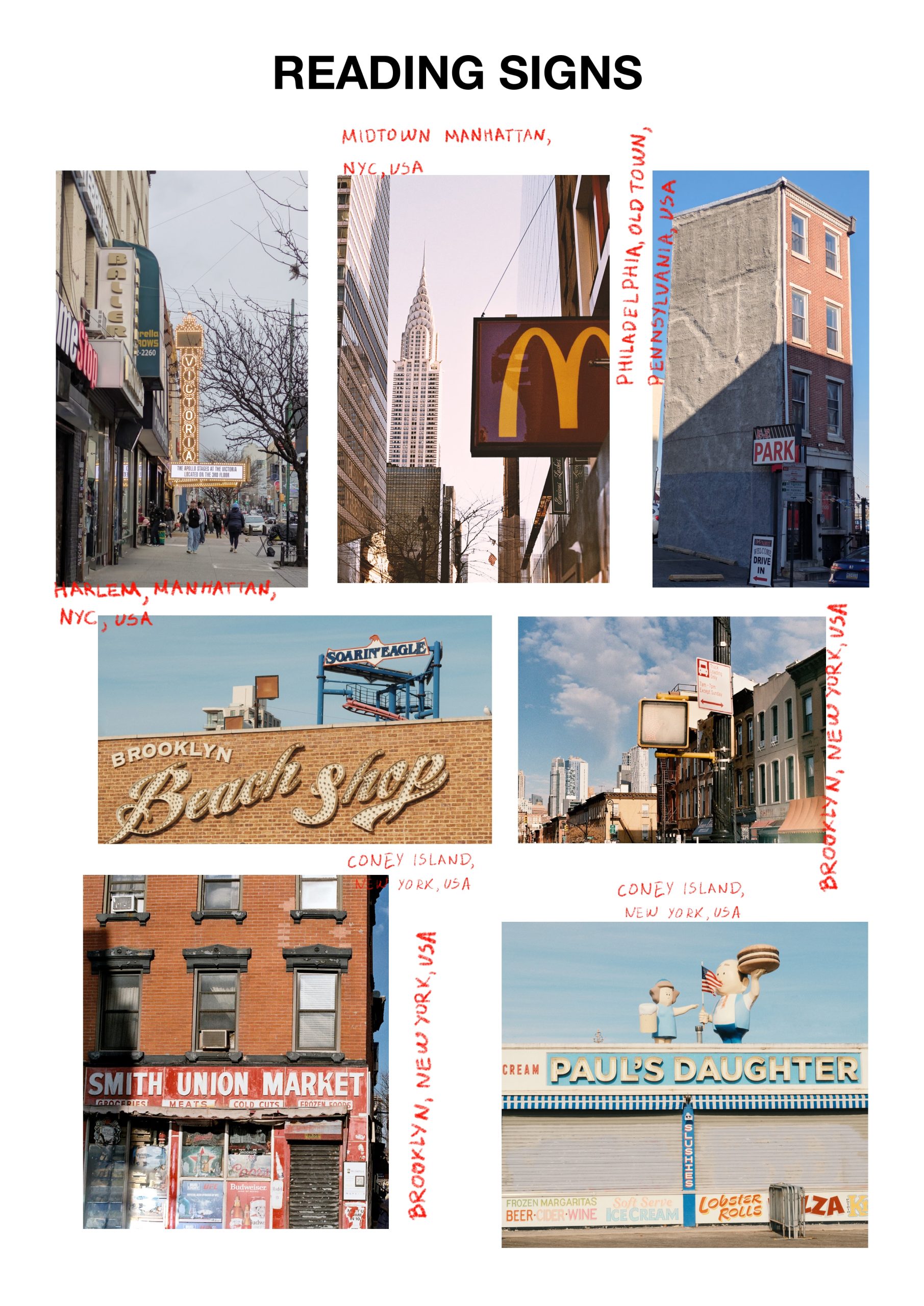
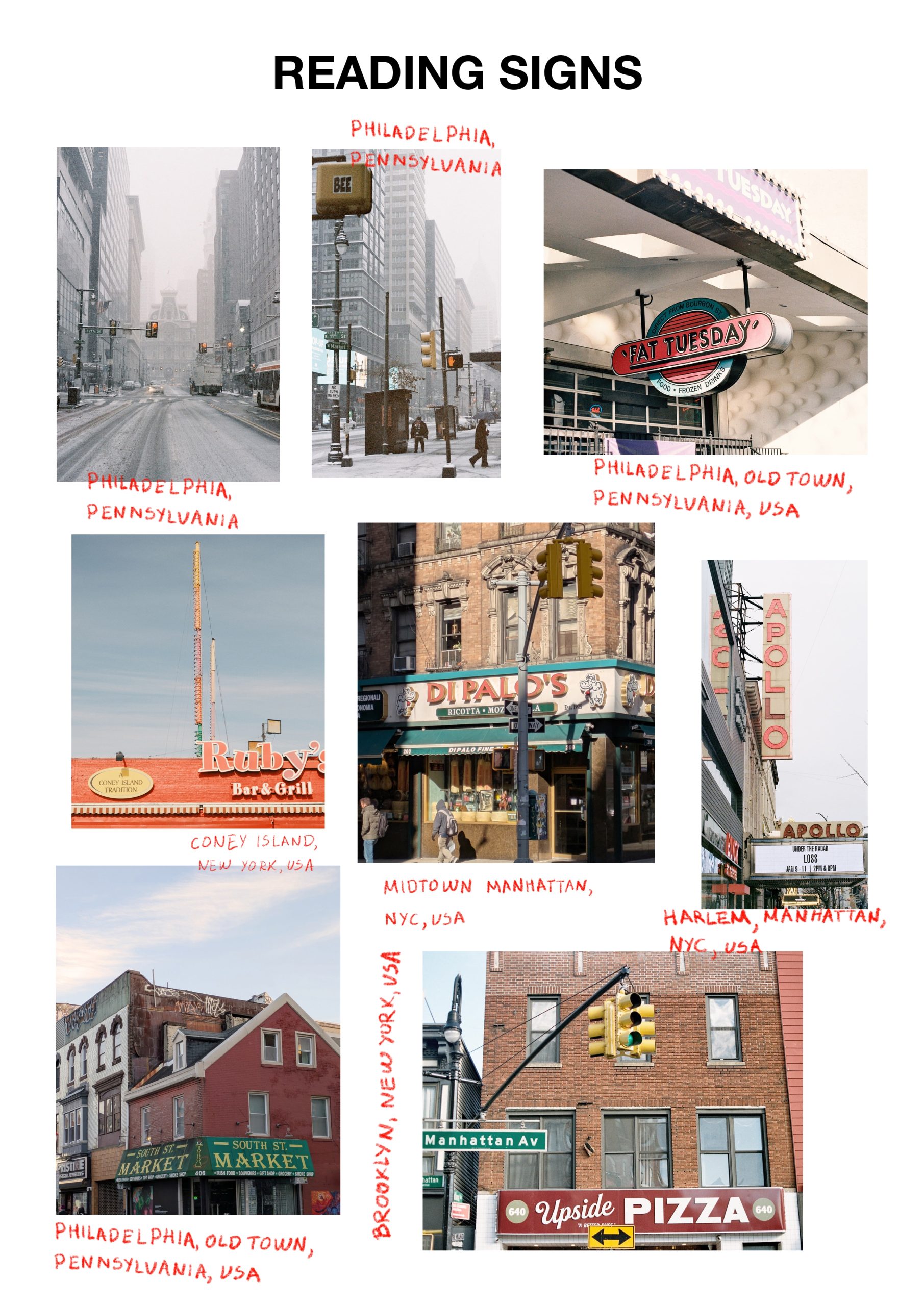
Something that might seem relatively unimportant but is somehow so significant in experiencing a new city is its sign system. Signs are an urban detail, very archetypal of US city landscape and help get a real feeling of the neighbourhood and its history. Sometimes randomly placed and barely designed, they add a slight rugged touch or a cheeky hint of color. Others, such as the Appolo Theatre sign and the Conney Island Boardwalk signs, have turned iconic over the years. Wheather with light, color or font, they are the small signifiers of a culture and an iconic part of a cityscape.
Para pa pa pa..